


Jetour T1 & T2 Payload Controversy: What Is Really Going On?


There are few things more exciting than loading up the family, filling the fridge, throwing in the camping gear and pointing your vehicle towards the African bush.
But there is one number every adventure traveller should know before heading off: payload.
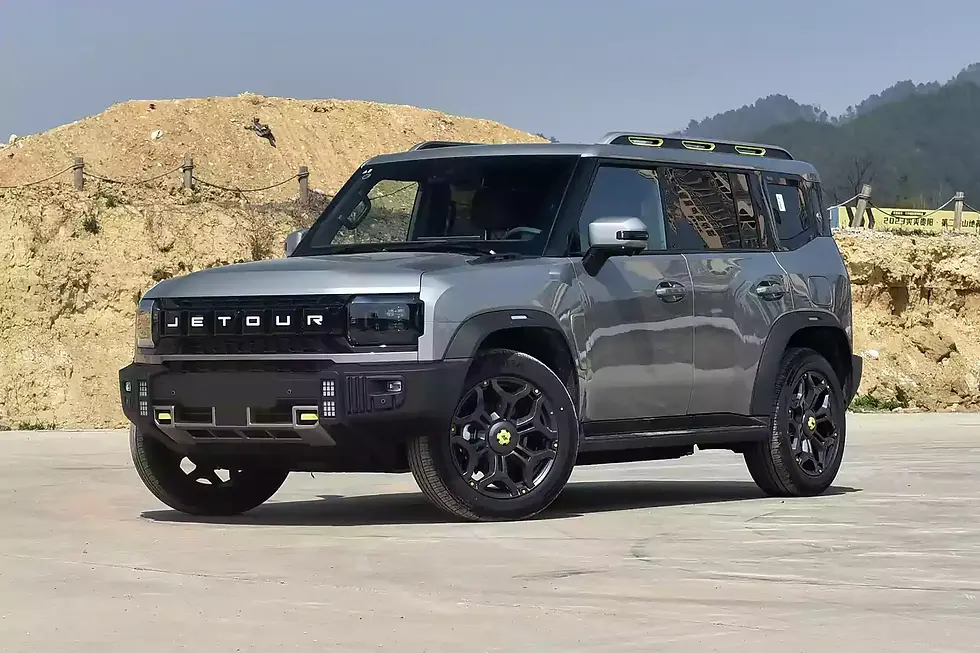
And right now, the Jetour T1 and T2 have found themselves at the centre of a rather interesting payload controversy in South Africa. What started with questions about an unusually low 300 kg rating has developed into revised figures, regulatory questions, independent weighbridge testing and one T2 derivative that apparently didn't quite make the new 475 kg figure.
So, what is actually going on?

The problem started with 300 kg
When the Jetour T1 and T2 arrived in South Africa, one number immediately caught the attention of people who actually use their SUVs for adventure travel: 300 kg.
For a five-seat SUV marketed towards people wanting to explore, camp and travel, that isn't a lot.
Think about it practically. Five adults weighing an average of 75 kg each already total 375 kg. That's before the cooler box, luggage, camera gear, recovery equipment, camping chairs, water, food or anything else you might normally carry on a weekend away.
At KhakiBush, this is where the conversation becomes particularly interesting.
There's a big difference between driving an SUV around town with one or two people inside and loading it up for a proper African adventure.
And payload is one of those numbers that can easily get overlooked when we're comparing horsepower, infotainment screens, ground clearance and four-wheel-drive systems.

Then the number suddenly changed
In August 2026, Jetour South Africa announced that the approved payload capacity for the relevant T1 and T2 models had increased to 475 kg, inclusive of the driver.
That's a substantial jump from the original 300 kg figure.
Even more interesting was Jetour's explanation that no mechanical, structural or component changes were required to achieve the higher rating. The company said the revised figure applied to vehicles in their existing configuration and that the new rating covered relevant new and existing vehicles.
On the face of it, this sounded like very good news for owners.
But it also raised an obvious question:
How does a vehicle gain another 175 kg of payload without changing the vehicle?
That question has become the heart of the controversy.
Why the Automobile Association started asking questions
The Automobile Association of South Africa (AA) wasn't convinced that the matter should simply end with a revised number on paper.
The organisation questioned how the rating could increase by almost 200 kg without structural or mechanical changes, and questioned the regulatory process behind the revised rating.
The AA also raised concerns about the reliance on manufacturer-supplied international test documentation rather than independent local verification.
And to be fair, this isn't a trivial argument.
We're talking about the maximum legal mass of a vehicle travelling on South African roads.
Payload affects far more than whether you can squeeze another cooler box into the boot. It influences braking, suspension, tyres, handling and overall vehicle dynamics when a vehicle is fully loaded.
For those of us who spend time on gravel roads, sand, mud and remote tracks, the subject becomes even more important.
So Jetour and the regulators put the vehicles on a weighbridge
This is where things get really interesting.
Following the questions raised by the AA, independent payload testing took place at the Clayville Testing Centre in Gauteng, with both the AA and the National Regulator for Compulsory Specifications (NRCS) present.
Five T1 and T2 derivatives were tested.
And the results were certainly interesting.
The numbers
Model | Tested payload |
Jetour T1 Odyssey 2.0T | 538 kg |
Jetour T1 PHEV 1.5T | 508 kg |
Jetour T2 Odyssey 2.0T | 500 kg |
Jetour T2 PHEV 1.5T | 478 kg |
Jetour T2 Xplora 2.0T | 455 kg |
Four of the five tested vehicles came in at or above the revised 475 kg figure.
The T2 Xplora, however, recorded 455 kg according to the AA's calculations — 20 kg below the revised rating.
And that has added another chapter to the story.

Jetour says there's an explanation
Jetour has disputed the interpretation of the Xplora result, saying the discrepancy relates to fuel levels.
According to a response reported by IOL, Jetour said the original test vehicle had a full tank of fuel and that it had subsequently been retested using the appropriate fuel quantity. The company said it would conduct another weigh-in.
So, at this stage, it would be unfair to simply declare that the Xplora has a 455 kg legal payload and leave it there.
The important point is that the testing has highlighted a discrepancy that needs to be properly explained and resolved.
And that's exactly why independent testing is valuable.

But there's another twist — the T1
Perhaps the most confusing part of the story concerns the T1.
Jetour's August announcement stated that the 475 kg rating applied to the relevant T1 and T2 model range.
However, the AA says the NRCS has confirmed that Jetour's application for the revised T1 payload rating is still being processed.
According to the AA, this means the original 300 kg homologated rating remains applicable to T1 vehicles while the application is under consideration.
That's a pretty important distinction for anyone who owns or is considering buying a T1.
It also highlights why these matters shouldn't simply be dismissed as internet arguments between car enthusiasts.
When you're spending hundreds of thousands of rand on a vehicle, you want to know exactly what you're legally allowed to carry.

Why payload matters to the KhakiBush lifestyle
Here's where I think this whole debate becomes relevant beyond the Jetour brand.
At KhakiBush, we spend a lot of time talking about getting outdoors.
Camping. Fishing. Surfing. Photography. 4x4 travel. Weekend escapes. Long-distance road trips. Family adventures.
And all of those things involve stuff.
A vehicle can have brilliant off-road capability, impressive ground clearance and a sophisticated four-wheel-drive system, but if you can't legally load it with the people and equipment required for your trip, some of that capability becomes rather academic.
There's something special about heading into the bush with everything you need packed into the vehicle.
But before you do that, you need to understand your vehicle's tare mass, GVM and payload.
What is payload?
Simply put, payload is the amount of weight you can add to the vehicle without exceeding its permitted Gross Vehicle Mass (GVM).
That means it's not just your camping equipment.
Payload can include:
Driver
Passengers
Luggage
Camping equipment
Recovery gear
Fridge/freezer
Water
Food
Roof equipment
Accessories
And other items carried by the vehicle
This is why a vehicle's brochure payload figure should never be viewed in isolation.
The 475 kg figure sounds much better — but context matters
Going from 300 kg to 475 kg obviously makes the T1 and T2 much more usable.
But 475 kg isn't an invitation to load the vehicle until the roof is touching the suspension.
Five people can consume a significant portion of that allowance before you've packed anything.
And accessories matter.
Fit a roof rack, awning, bash plates, recovery equipment, towbar, roof tent and other expedition equipment and you've added weight before the first suitcase has gone into the boot.
This is something we often forget when looking at a vehicle fresh out of the showroom.
Your adventure vehicle rarely stays showroom standard.
The bigger question isn't necessarily "Is the Jetour safe?"
I think this is an important distinction.
The current debate doesn't automatically mean that the T1 or T2 is an unsafe vehicle.
The latest local testing actually showed four of the five tested derivatives achieving payload figures above the revised 475 kg rating.
What the controversy does show is that the approval process and the communication around the payload figures need to be crystal clear.
The AA's concerns are legitimate questions for a regulator to answer.
Jetour, meanwhile, has provided an explanation for why the original and revised calculations differed, and has said the vehicles were engineered and tested for higher technical masses.
The responsible thing now is for the relevant parties to resolve the outstanding questions with proper documentation and independent verification.
That's good for Jetour.
It's good for the regulators.
And most importantly, it's good for the people actually driving these vehicles.
What should a potential T1 or T2 buyer do?
If you're considering a Jetour T1 or T2, I wouldn't panic.
But I also wouldn't ignore the issue.
Before signing on the dotted line, ask the dealer for the specific payload, GVM and licensing information applicable to the exact derivative you're buying.
If you're planning to use the vehicle for overlanding, take your expected load seriously.
Five passengers, luggage and camping equipment can add up remarkably quickly.
And if you're towing, remember that towball loading and the additional equipment associated with towing also have to be considered within the vehicle's permitted limits.
For serious travellers, I'd go one step further.
Take the loaded vehicle to a weighbridge.
Do it before heading off on that big African adventure.
It might be the best few minutes and few rand you spend on your vehicle.
The lesson goes beyond Jetour
Perhaps the most valuable thing to come out of this whole saga is that it's reminded South African motorists to look beyond the glossy brochure.
We get excited about engines, tyres, suspension, wading depth and four-wheel-drive systems — and rightly so.
But sometimes the most important number is the least exciting one printed on the specification sheet.
Payload.
Because when you're standing beside your vehicle at a remote campsite, with the kettle boiling and the sun disappearing behind an African horizon, the last thing you want to discover is that your dream adventure vehicle is carrying more than it was designed or legally approved to carry.
At KhakiBush, we believe adventure should open the door to Africa, not create unnecessary risk getting there.
There's a whole continent waiting beyond the tar road. Pack wisely, understand your vehicle, respect its limits — and then go explore.
Because few experiences compare to waking up in the wild knowing that the road ahead is yours to discover.
The bottom line
The Jetour T1 and T2 payload story isn't finished yet.
The revised 475 kg figure is a significant improvement over the original 300 kg rating, and recent testing supports that figure for four of the five derivatives tested.
But questions remain around the T2 Xplora result, the exact regulatory status of the T1, and the process used to revise the ratings without physical vehicle changes.
For prospective buyers, the sensible approach isn't to write the Jetour off — or blindly accept every number either.
Ask questions. Check the paperwork. Know your GVM. Weigh your loaded vehicle.
That's responsible adventure.
And in Africa, where the best roads often start where the tar ends, that's something worth getting right.

This article is written by Craig Mitchell, KhakiBush Magazine editor, conservationist, guide, adventurer, photographer, videographer and explorer. Craig personally guides safari and adventure expeditions, sharing his passion for Africa's wild places through authentic wildlife encounters, remote landscapes, and unforgettable experiences.
Keywords: Jetour T1, Jetour T2, Jetour T2 payload, Jetour payload controversy, Jetour T1 payload, Jetour T2 Xplora, Jetour South Africa, Jetour 475kg payload, Jetour 300kg payload, NRCS, Automobile Association South Africa, SUV payload, overlanding South Africa, 4x4 payload
