


Extreme Coastal Survival: The Reality Behind the Shoreline

Most people visit the coast, swim, dive, or enjoy a day on the rocks without ever facing danger. Yet with an estimated 35–40% of global Search and Rescue (SAR) operations linked to maritime incidents, coastal survival remains one of the most underestimated components of preparedness training.
A few years ago, during a free-diving excursion, we took a boat out into open water to find the right depths for apnoea training. I had always considered myself comfortable in the ocean, but my diving partner — an experienced freediver who had survived a near-fatal incident — made me aware of the small, easily overlooked details that separate a safe dive from a dangerous one.

Open water looks deceptively simple: descend, settle on the sand, regulate your heartbeat, slow your mind, and surface again. But the ocean is never passive. My partner spoke about shallow-water blackouts, the behaviour of marine life, the risks of a capsizing vessel, and the correct response to each scenario. His perspective, shaped by lived experience, gave me a deeper respect for the ocean’s unpredictability.
While worst-case scenarios may leave a person adrift at sea, coastal survival offers a very different landscape — one that, surprisingly, favours the survivor. The shoreline provides resources that inland environments often lack. Water is one of them. But in survival, nothing is ever straightforward. Sea water demands knowledge of primitive desalination techniques before it becomes usable.
The coastline also provides debris, driftwood, and discarded materials that can be repurposed with a bit of skill and clear thinking. And this leads us to the core of all survival training: mentality.

The ability to make rational decisions under pressure — to prioritise needs, improvise solutions, and adapt to changing conditions — is the most valuable survival skill anyone can train. Through Live Ready’s courses, we focus on instilling these principles of survival psychology and decision-making. Skills and knowledge alone are not enough; the survivor must have the mental fortitude to apply them effectively in any environment.
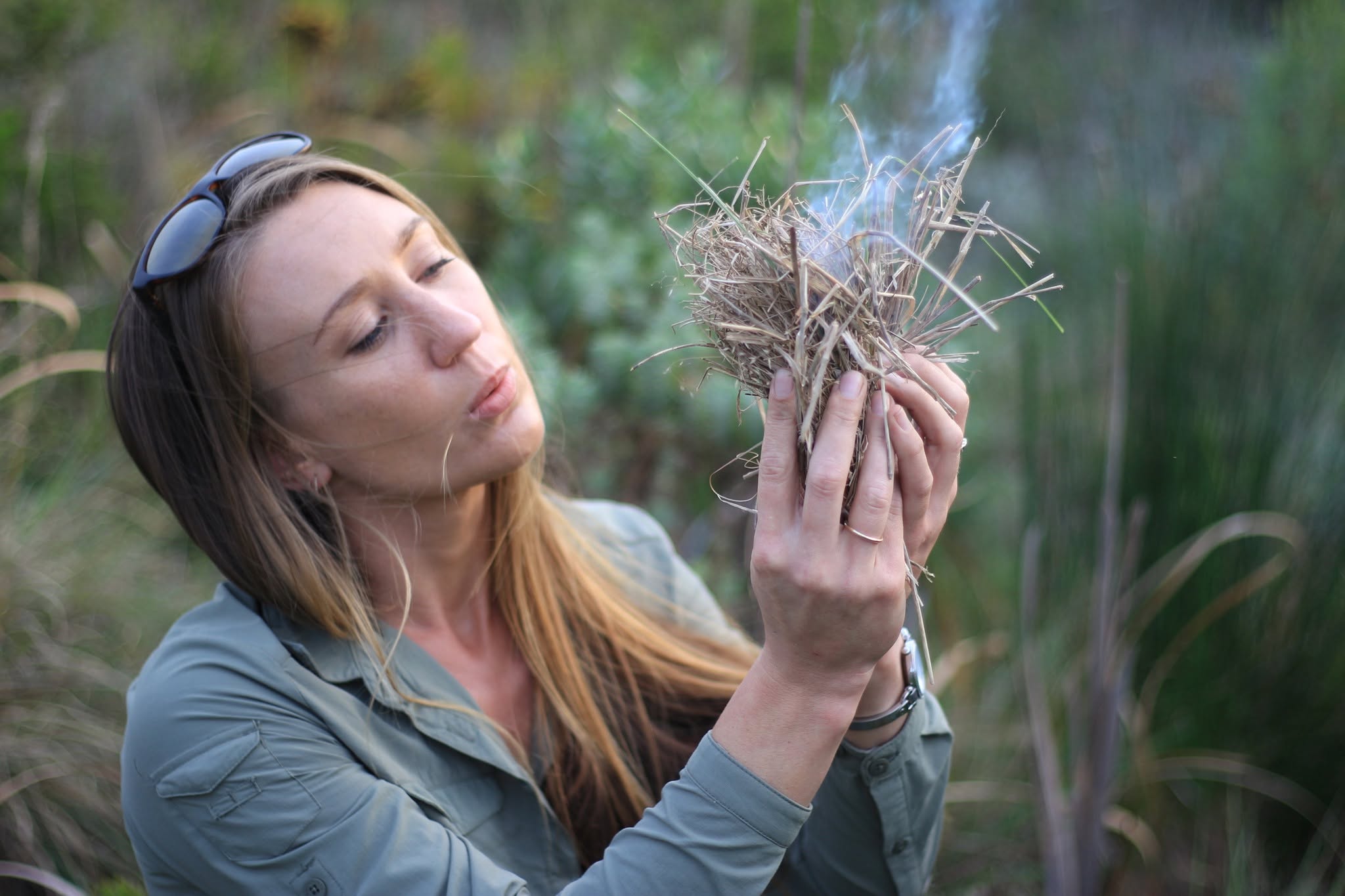
This October, from 26–30 October 2026, Live Ready will be running the Extreme Coastal Survival Course at Habonim in Hermanus. Presented over five days by STASA qualified survival instructor Clarise du Plessis, participants will learn to adapt their skills to the coastal environment, gradually reducing reliance on man-made resources as the course progresses toward its primitive survival foundation. With fewer tools available, survival becomes a test of ingenuity — and necessity becomes the ultimate teacher.
Bookings are essential. To book mail info@liveready.co.za.
Check out the website https://www.liveready.co.za/

This article is written by Clarise du Plessis, founder of Live Ready, a faith-based survival, bushcraft and preparedness platform dedicated to helping people develop practical outdoor skills and everyday resilience. As a professional survival instructor and close protection officer, Clarise combines real-world experience with a passion for self-reliance, responsible preparedness and wilderness education, inspiring others to confidently embrace the outdoors while respecting nature and living ready for whatever life brings.
Keywords: coastal survival, survival skills, ocean survival, wilderness survival, survival training South Africa, coastal survival course, ocean safety, survival psychology, primitive survival skills, Hermanus survival course, Live Ready, adventure survival, survival preparedness, South Africa survival courses


